Your environment, specifically the sound level around you, affects how well you hear and understand speech. When you’re in a noisy spot, like a Friday night trip to Hoppin’ Grapevine, you have to work a little harder than you would in a quiet area, like your home living room.
Without hearing loss, adapting to these environments is relatively easy; understanding speech in noisy environments is more challenging but not impossible. However, when you have hearing loss, all the competing sounds in your environment can fuse, making it difficult for you to understand what people are saying.[1]
Hearing loss might make it more difficult to adapt to varying environments, but, luckily enough, hearing aids have special programming to help you process sound more effectively.
Understanding Hearing Aid Programming and Adjusting
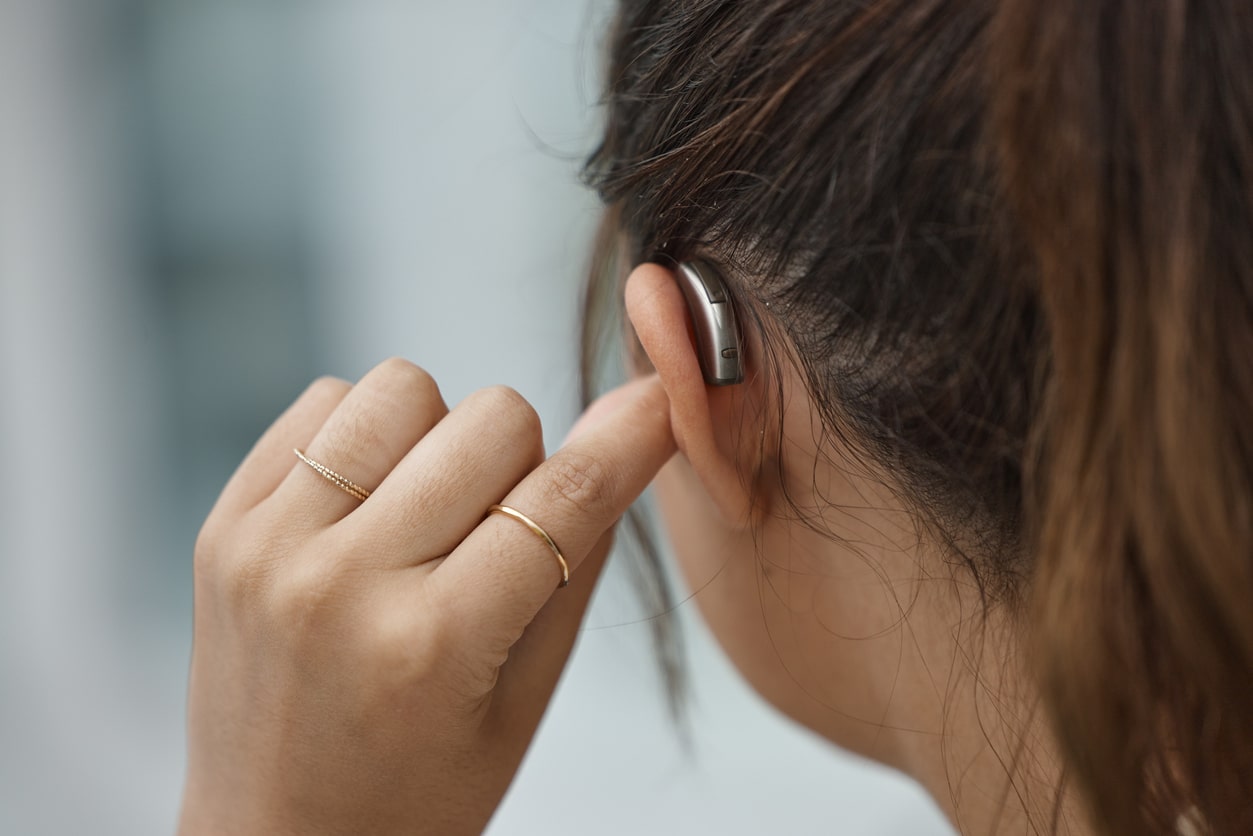
When you get prescription hearing aids, your specialist will program your devices. That programming step ensures that your devices match your specific needs. Depending on the style, your hearing aids may come with a companion app, button controls or both. You can use those controls to adjust the volume of your devices to suit your environment, raising it at crowded bars and lowering it when you’re home alone.
Some hearing aids come with directional microphones, which pick up and amplify sound in front of and behind you—an essential tool in crowded rooms. You can enable directional microphones on your device’s smartphone app.
Automatic Programming Adjustments
In some cases, you will need to manually adjust your hearing aid settings to fit your environment. Your companion app may even have a “favorites” section where you can set controls for specific environments—sort of like speed dial for your hearing needs. In other cases, your hearing aids will use advanced AI to automatically adjust your settings in real time, so you can enjoy clearer sound without having to fiddle with them.
Well-programmed hearing aids offer the best results. If you have questions about adjusting the programming in your devices, contact Heard It Through The Grapevine Audiology, PC today to talk to one of our specialists.
[1] Glyde, H., Hickson, L., Cameron, S., & Dillon, H. (2021). Problems hearing in noise in older adults: A review of spatial processing disorder. Journal of the Association for Research in Otolaryngology, 22, 359–378. https://doi.org/10.1007/s10162-021-00790-7