The Fourth of July is full of barbecue, fireworks and maybe even a dip in the Pleasant Glade Pool. Unfortunately for your ears, this holiday brings as much noise as it does fun—especially if you’re attending a fireworks show.
Any noise at or above 85 A-weighted decibels (dBA) can damage your hearing.[1] Hearing damage arises when loud noises overstress the tiny hair cells in your ear responsible for transmitting sound. If enough of the cells are damaged, permanent hearing loss can arise. A fireworks show can reach levels upwards of 140-160 dBA[2]—well within the range for immediate hearing damage.
Let’s examine two ways you can keep your hearing safe this Fourth of July.
Stand a Good Distance Away From Fireworks
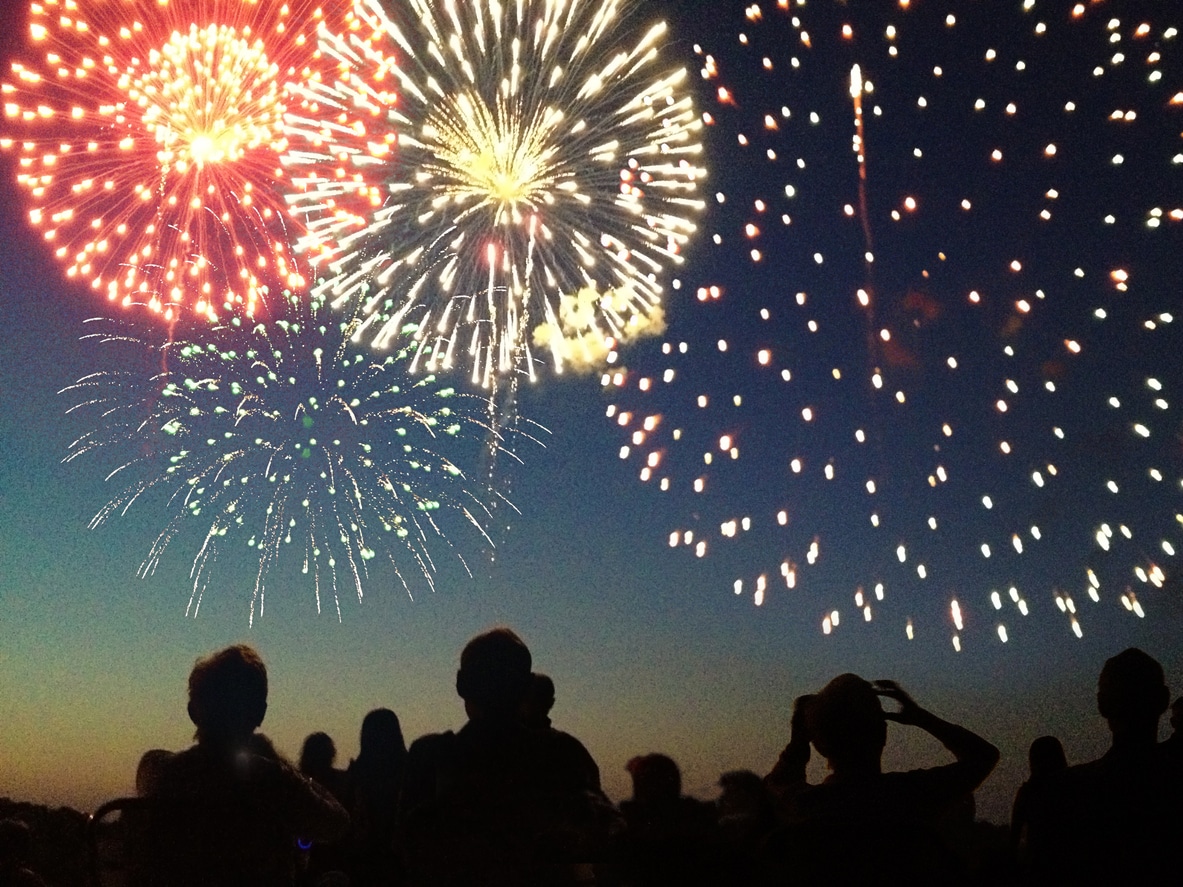
The farther you get from the source of a sound, the less impact it will have on your hearing. In the case of fireworks, standing far away from the explosion will also protect you from physical harm. Watch fireworks from at least 35 feet away from ground displays and at least 150 feet from aerial displays.
Wear Hearing Protection
Hearing protection dulls the force with which sound hits your ears. Disposable foam plugs, available at most drugstores, are an excellent option if annual fireworks are your only source of loud noise exposure. If you also attend plenty of booming concerts or hyper-loud movies with lots of explosions, consider upgrading to a reusable option.
Pre-molded, reusable hearing aids are made of rubber, silicone or plastic. You can choose plugs shallow enough to sleep in or options with special filters for clearer music. You can find an overview of more types of earplugs on the website for the National Institute on Deafness and Other Communication Disorders.[3]
The Fourth of July shouldn’t leave you with muffled hearing or ringing in your ears. If you notice any of these or other signs of hearing loss following your celebration, contact Heard It Through The Grapevine Audiology, PC to schedule a hearing test with one of our specialists.
[1] Cleveland Clinic. (2026). Noise-induced hearing loss (NIHL). Cleveland Clinic. https://my.clevelandclinic.org/health/diseases/21776-noise-induced-hearing-loss-nihl
[2] National Institute on Deafness and Other Communication Disorders. (2025). Noise-induced hearing loss (NIHL). NIDCD. https://www.nidcd.nih.gov/health/noise-induced-hearing-loss
[3] National Institute on Deafness and Other Communication Disorders. (2025). Hearing protectors. NIDCD. https://www.nidcd.nih.gov/health/hearing-protectors