The American Heart Association recommends that people get at least 150 minutes of aerobic exercise a week.[1] Cycling is one fun way to hit that number. When you’re protecting your heart health with cycling, you should also keep ear protection in mind to ensure your rides don’t end in hearing damage.
How Does Cycling Affect Hearing?
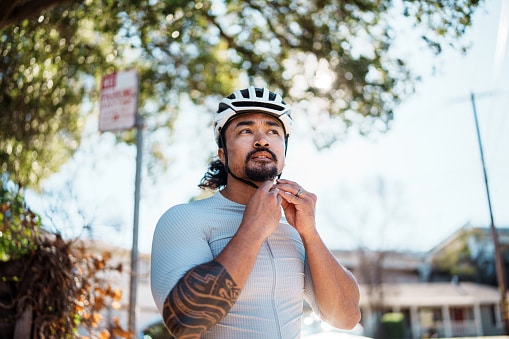
An evaluation of noise exposure when cycling found that wind noise reaches volumes ranging from 84.9 dB at 10 mph to a maximum of 120.3 dB at 60 mph.[2]
Repeated or long-term exposure to any noise at or above 85 dB can damage your hearing. If that noise increases to 120 dB, hearing loss can occur immediately.[3]
While you can’t control the presence of wind on a bike ride, there are a few ways you can protect your hearing without sacrificing your aerobic exercise.
Hearing Protection Measures
The best hearing protection should safeguard your ears without reducing your background awareness. Next time you ride around the Dove Loop Trail, try the following hearing protection options:
- Wear a sweatband. A sweatband is a simple and cheap way to reduce wind noise on your ears; it’s insulated enough to lower the volume but porous enough to keep you aware of your surroundings.
- Cycling wind guards. Cycling wind guards come in a few forms: helmet panels, headbands, and foam blocks. Foam blocks and headbands will cover your ears and absorb noise, while panels will deflect wind before it reaches your ears.
If you’re an avid cyclist, you should also schedule regular hearing tests one to two times a year, depending on whether you have additional hearing loss risk factors (e.g., occupational noise exposure, genetic history of hearing loss).
Call Heard It Through The Grapevine Audiology, PC today to schedule your hearing test with one of our specialists.
[1] American Heart Association. (2024). American Heart Association recommendations for physical activity in adults and kids. American Heart Association. https://www.heart.org/en/healthy-living/exercise-and-physical-activity/fitness-basics/aha-recs-for-physical-activity-in-adults
[2] Seidman, M. D., Wertz, A. G., Smith, M. M., Jacob, S., & Ahsan, S. F. (2017). Evaluation of Noise Exposure Secondary to Wind Noise in Cyclists. Otolaryngology–head and neck surgery : official journal of American Academy of Otolaryngology-Head and Neck Surgery, 157(5), 848–852. https://doi.org/10.1177/0194599817715250
[3] National Institute on Deafness and Other Communication Disorders. (2025). Noise-induced hearing loss. National Institute on Deafness and Other Communication Disorders. https://www.nidcd.nih.gov/health/noise-induced-hearing-loss